UGC Portfolio vs. Media Kit: What Should You Send a Brand?
Learn when to send a UGC portfolio, media kit, or both based on whether a brand needs content production, audience distribution, or both.
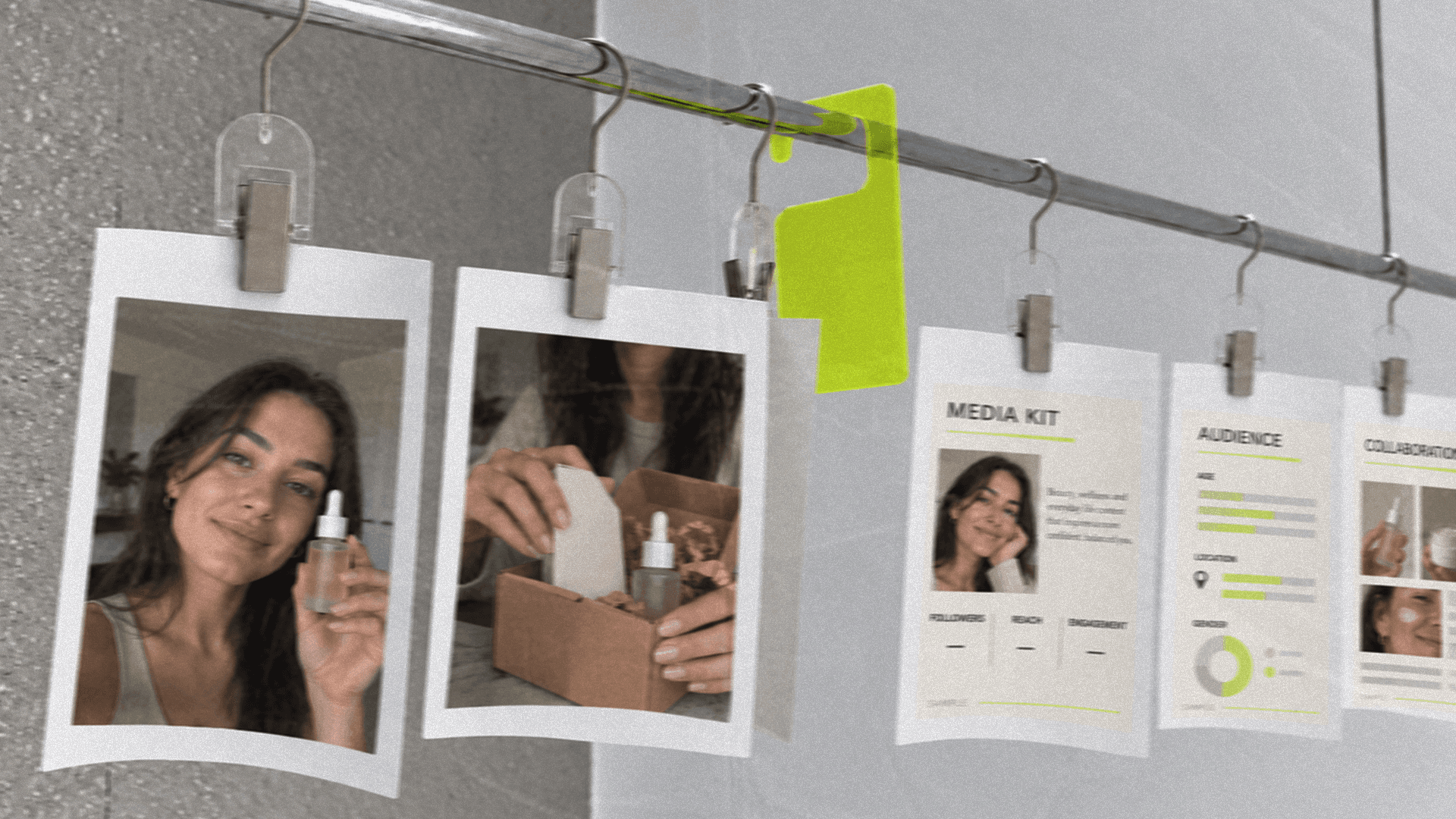
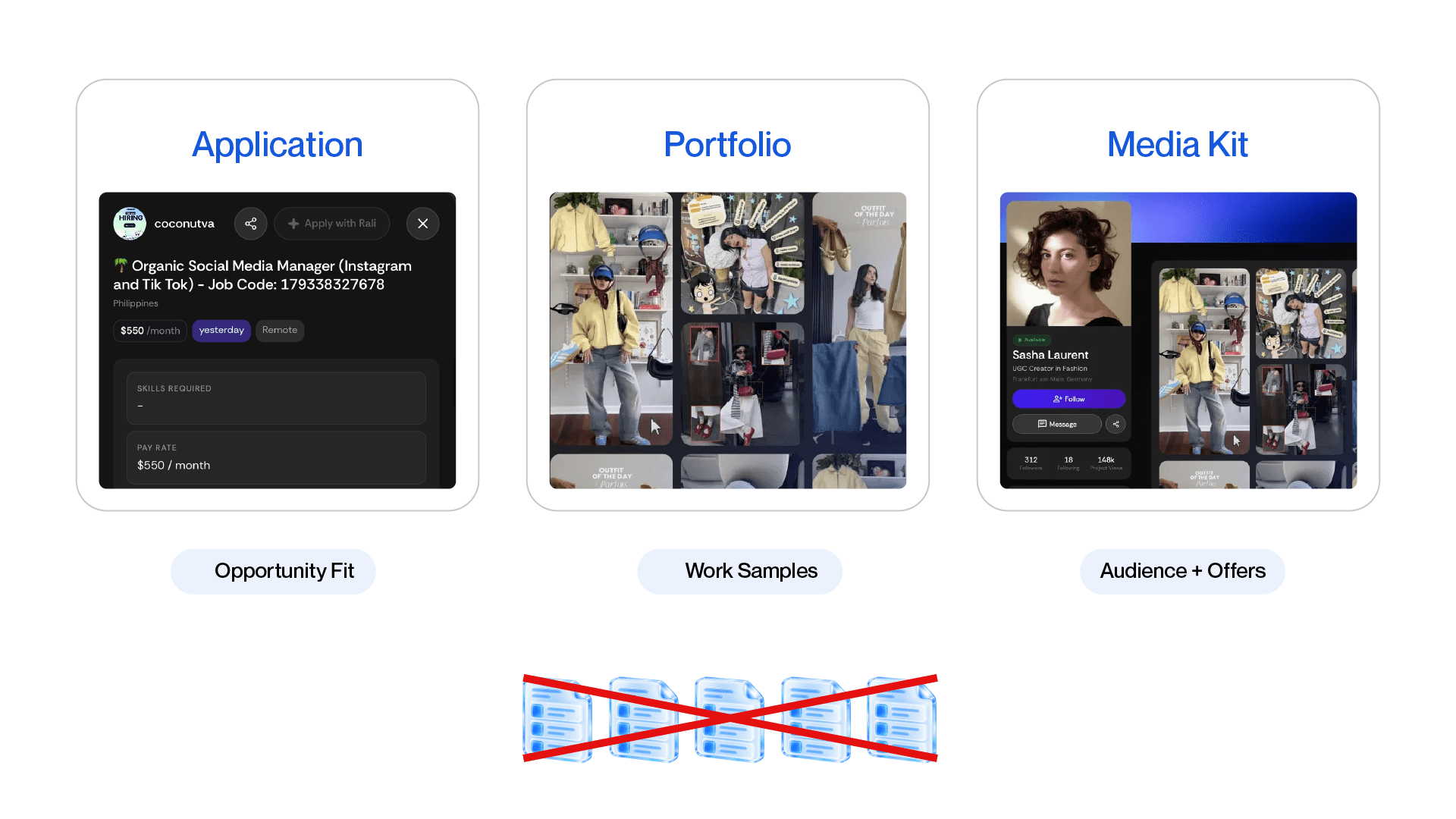
The distinction comes down to what the brand needs to assess: what you can create and who you can reach. Document names vary, so always follow the brief’s instructions.
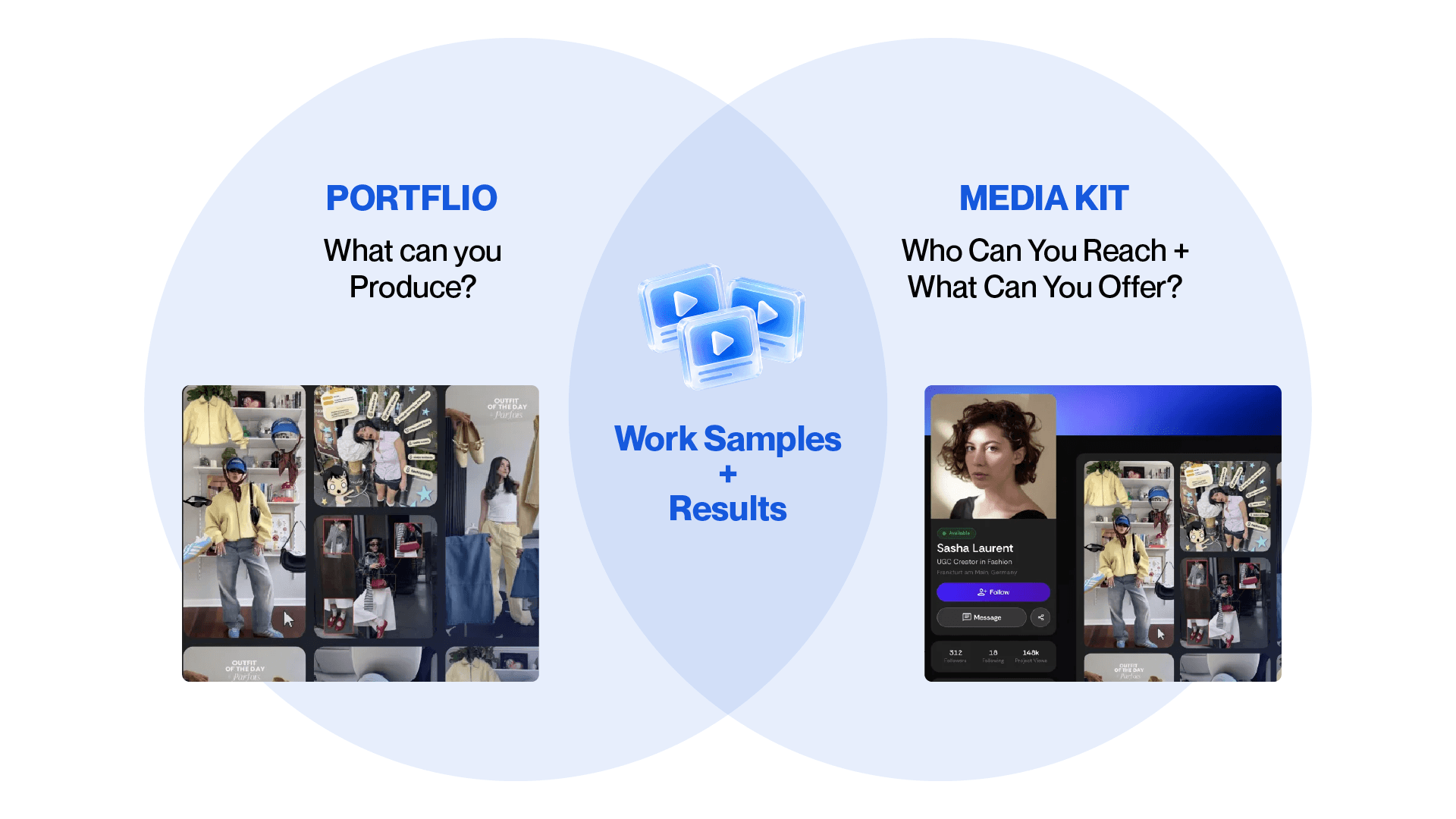
What Is a UGC Portfolio?
A UGC portfolio is a selected collection of work that helps brands assess your ability to produce the content they need. Examples might include product demonstrations, tutorials, talking-to-camera videos, or lifestyle content.
What to Include in a UGC Portfolio
| Element | What it tells the reviewer |
|---|---|
| Relevant samples | Whether you can create the requested content |
| Format and category | What type of work each sample represents |
| Your contribution | Whether you scripted, filmed, presented, edited, or handled other responsibilities |
| Project context | The objective and whether the work was commissioned or self-initiated |
| Verified results, when useful | How the asset performed within a clearly identified distribution context |
| Contact details | How to discuss a project with you |
Lead with work relevant to the opportunity. Label personal projects clearly and distinguish your contribution from the work of collaborators.
UGC Portfolio Examples: What Makes a Strong Sample?
The best UGC portfolio examples do more than display a finished video. They help a brand understand what you created, which skills you demonstrated, and why the sample is relevant.
For example:
- Product demonstration: A skincare video showing how to apply a product, with clear visuals and a natural explanation of its use.
- Problem-solution video: A household product demonstration that opens with a relatable problem before showing how the product helps.
- App tutorial: A screen recording or walkthrough that shows how a digital product works, with clear steps and supporting visuals.
- Lifestyle video: A product integrated into a realistic routine, demonstrating your ability to create natural-looking branded content.
These are illustrative formats, not a checklist you need to complete. Choose samples that match the brand's product, target audience, and creative requirements.
You can see the UGC case studies from Masterhooks for real examples of creator videos that generated strong viewership and inspiration for your own portfolio.
Where Rali Fits With a Portfolio
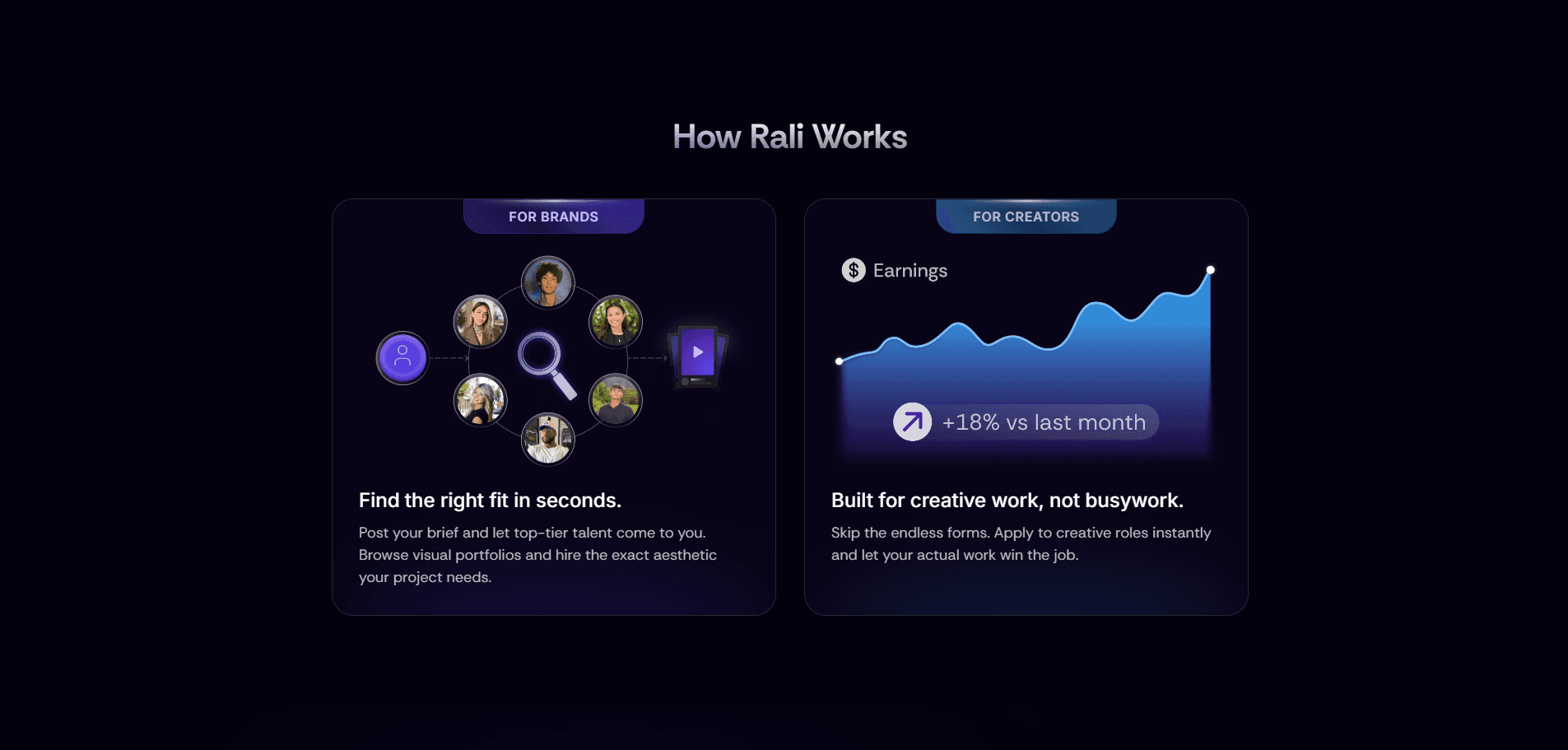
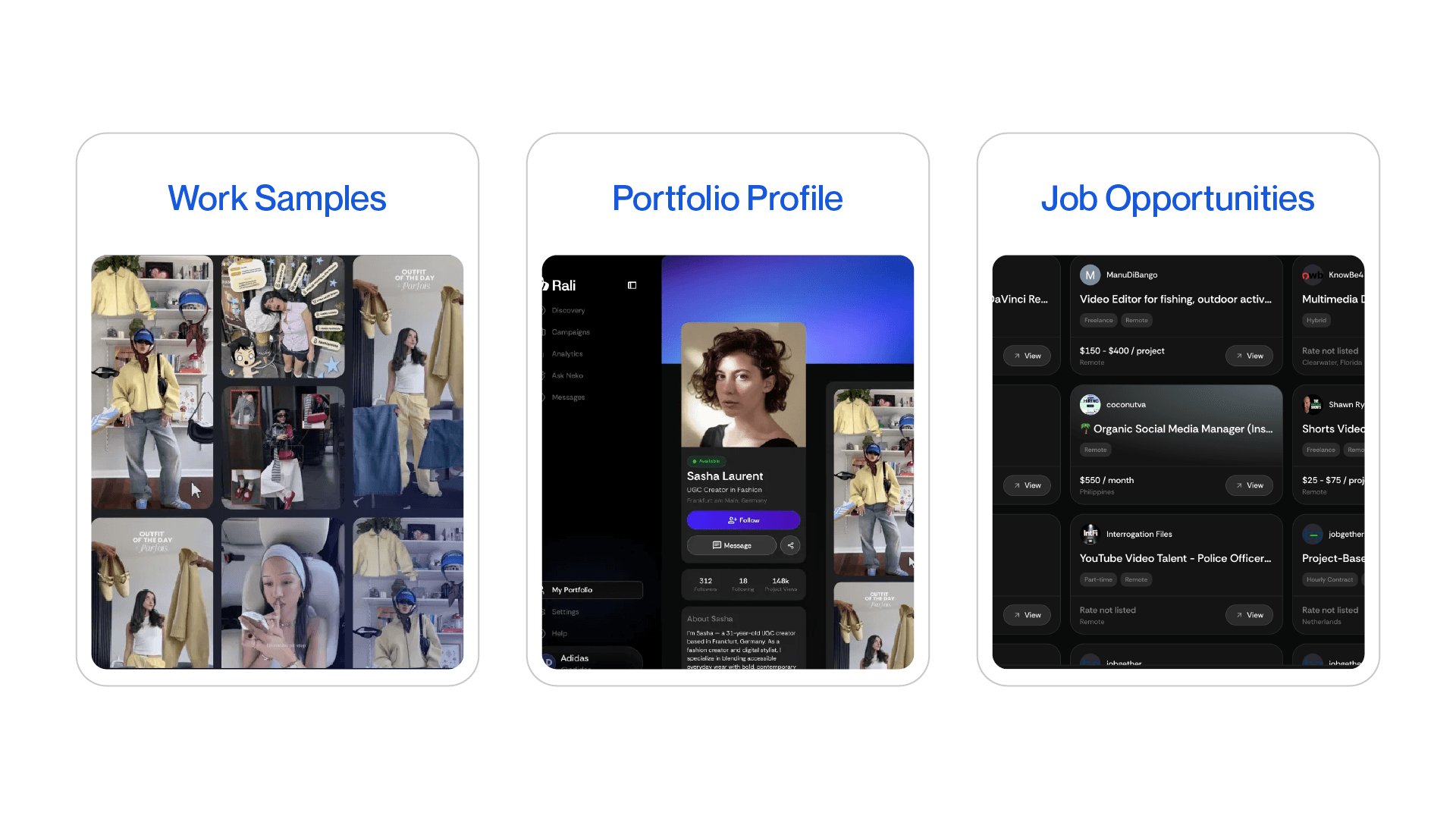
One place to present that work is Rali, the discovery platform built for content and UGC creators. Its creator profiles and portfolios let creators showcase previous work alongside content analytics, while job discovery and application tracking support their search for creative opportunities.
If a brand also needs audience demographics or partnership information, provide the requested details alongside your portfolio.
What Is a Creator Media Kit?
A creator media kit summarizes the information a brand needs to assess a potential partnership. It is particularly useful when the collaboration includes publishing to your own audience.
Some brands use the term “UGC media kit” more broadly, so check what information they expect.
| Element | What to include |
|---|---|
| Positioning | Your niche, content focus, and relevant platforms |
| Audience | Available demographic and geographic information, plus follower or subscriber counts |
| Performance | Clearly defined metrics with reporting dates or periods |
| Partnership formats | Services you offer, such as sponsored posts, product integrations, or content production |
| Selected work | Relevant examples and permitted previous collaborations |
| Contact and pricing | Contact details, with rates or a way to request a quote |
Keep the selection relevant to the proposed partnership. Rates are optional unless requested; a tailored quote may be more useful when scope, distribution, or usage requirements vary.
Portfolio vs. Media Kit at a Glance
| UGC Portfolio | Creator Media Kit | |
|---|---|---|
| Primary purpose | Demonstrate production ability | Summarize audience and partnership offering |
| Typical evidence | Work samples, role, format, project context, relevant outcomes | Audience demographics, platform metrics, collaboration formats, past partnerships |
| Best use | Production-focused UGC work, editing, creative jobs | Sponsored posts and audience-distribution partnerships |
| Can include work samples? | Yes | Yes |
| Can include performance data? | Yes | Yes |
| Common mistake | Sending lots of work without explaining relevance | Showing impressive-looking numbers without dates, definitions, or audience context |
The documents can overlap, but the difference is what the reviewer needs to decide.
Choose What to Send Based on the Brief
| What the brand needs | Lead with | Supporting information |
|---|---|---|
| Content for its own channels or ads | UGC portfolio | Relevant samples, your contribution, and requested production details |
| A sponsored post on your account | Media kit | Audience fit, recent platform performance, and examples of your creative style |
| Content production and posting | Both, or one clearly organized package | Production evidence and audience information in separate sections |
| An employed creative role | Portfolio and requested application materials | Evidence of the skills and responsibilities in the job description |
Follow explicit submission instructions. If a brand requests a “media kit” for a production-only project, clarify whether it wants work samples, services, pricing, audience data, or a combination.
For projects involving posting and additional brand usage, confirm those requirements separately from the choice of document.
What If You Have a Small Audience?
For production-only work, relevant samples can demonstrate your skills even when your personal audience is small. A clear skincare demonstration may provide more useful evidence for a skincare brief than unrelated content from a larger account.
When a partnership includes posting, brands also need to assess audience relevance and performance. A larger follower count alone does not establish a better fit.
Read any audience requirements in the brief and provide the evidence the project requests.
Make Audience Metrics Interpretable
For each figure, identify:
| Platform and metric | Use the label shown by the source analytics. |
| Date or reporting period | Distinguish a current follower count from performance measured over time. |
| Scope | State whether the figure covers one asset, selected posts, or an entire account. |
| Distribution | Identify paid amplification when known. |
| Your contribution | Separate your production role from campaign-wide results. |
For example, a hypothetical label could read:
“1.2M total TikTok video views across 12 posts, September 1–30, 2026; includes paid amplification.”
Views are not a count of unique people. Use each platform’s definitions and include the formula or calculation basis when reporting an engagement rate. Present campaign totals as campaign totals, even when you created some of the assets.
Send One Organized Package
Give each item a clear purpose:
| Item | Its job |
|---|---|
| Portfolio | Show relevant work with project context and your contribution |
| Media kit | Summarize audience fit, selected metrics, and partnership information |
| Application or email | Direct the reviewer to the materials relevant to this brief |
Link to full samples from the media kit instead of repeating every project. Include additional analytics or files when requested, and check that the reviewer can access each link.
UGC Portfolio vs. Media Kit FAQ
| What is the difference between a UGC portfolio and a media kit? A UGC portfolio showcases a creator's production skills through relevant work samples, project context, individual contributions, content formats, and verified results. A creator media kit, meanwhile, focuses on audience reach and partnership opportunities, typically including platform statistics, audience demographics, previous collaborations, content offerings, rates, and contact details. While the two may overlap, portfolios demonstrate creative capabilities, whereas media kits help brands evaluate audience value and potential partnerships. |
| Do UGC creators need a media kit? Not always. If you mainly produce content for brands to publish on their own channels, a strong portfolio may provide the most relevant evidence. A media kit becomes more useful when the partnership also involves your personal audience or brands regularly request audience and partnership information. |
| What should I include in a UGC portfolio? Prioritize portfolio samples that align with the types of creative projects you want to pursue. For each example, briefly explain the content, your specific contributions, the product category or use case, the skills demonstrated, and any verified results. Providing clear context helps brands evaluate your capabilities and determine whether your work matches their needs. |
| Can my portfolio include analytics? Yes, a portfolio can include performance data when that information adds useful context. The distinction between a portfolio and media kit is based on their primary purpose, not a rule banning metrics from one document. |
| Can my media kit include portfolio samples? Yes, creator media kits commonly include examples of previous work or collaborations. Keep the selection small enough that the document remains easy to scan. |
| Should I put my rates in a media kit? You can, depending on how you prefer to handle partnerships and what the brand requests since rates are commonly included in creator media kits, but they are not mandatory in every case. If pricing varies heavily by deliverables, rights, distribution, or campaign requirements, you may prefer to discuss the specific scope before quoting. |
Send the Evidence the Brand Needs
Use the brief to decide what to send. Make production skills visible through relevant work, and provide audience information when the partnership requires it.
Platforms like Rali help creators showcase their previous work through creator profiles and portfolios while exploring relevant professional opportunities. By presenting strong work samples and applying to creative jobs that match their skills, creators can make it easier for potential employers and brands to assess their capabilities.
Ready to give your creative work a portfolio that brands can discover while you explore relevant opportunities?
Keep reading
More Articles For CreatorsFor Creators
10 Platforms to Find Creator Jobs and Freelance Opportunities
Compare 10 platforms for creator jobs, freelance projects, UGC work, and brand partnerships based on skills, work type, eligibility, and requirements.
15 min read Niche GrowthNiche Growth
How to Become a Content Creator: A Beginner’s Guide
Learn how to become a content creator by choosing a focus, building practical skills, publishing work, creating samples, and exploring creative jobs.
12 min read Content StrategyContent Strategy
Product Demo Ideas: Different Creator Styles Brands Can Learn From
Explore four product demo creators using trend-led videos, tutorials, software walkthroughs, and sensory details to inspire your next creative brief.
7 min read